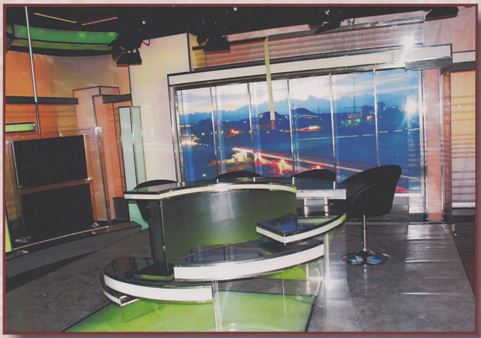
Kannywood TV Entertainment {tvK}, Is 24hours Online Tv Channel, Features the top news stories in Hausa Films Industry KANNYWOOD and other entertainment, arts & culture pertinent to North Nigeria. Based in Kano, guests from both the creative & business sides of the arts are interviewed live in our studio. We have already featured top professionals in film, music, art, and business including: Ali Nuhu, Rapper ClissicQ, Adam A Zango, soul musician Ali Jita, Rahama Sadau among others. TVK also brings you Hausa Tv Series, Feature Films and entertainment videos that cover all aspects of Hausa Films Industry from the top to the bottom, along with all the scandalous news footages of all that happen at event.
Zamani Photography Studio, started in the year 1969 is an innovative and specialized in traditional and digital photography services. We are passionate about photography and dedicated to producing the best images we can. Everyday, we are energized to create something new, something different. What makes us different from other studios is our passion and commitment to the art of photography. Our vast experienced professionals create artistic portraits with outstanding beauty to anyones’ eyes! Portraits that will capture moments in time which never return. Magical videos that touch the heart of all. Whatever the occasion put your trust in Zamani Studio, where professional and personal service is guaranteed. Go traditional, go conservative, go classy, whatever your desire we are there!
Liberty TV is a news and current affairs driven platform strategically broadcasting from Kaduna to a global audience, founded on the tenets of free speech, human and civil rights, and exercise of free market.

Address: Plot 529, Sylvester U. Ugoh Crescent, Jabi, Abuja
Anambra Broadcasting Service (ABS) is owned by the Anambra state government of Nigeria. It’s 2 FM and 2 TV stations covers Anambra and environs.
ABS HISTORY Broadcasting, both Radio and Television, started simultaneously in Eastern Nigeria, Enugu regional capital, on the 1st of October, 1960. The Radio system comprised one recording and one continuity Studio at ACB building, Ogui Road with one medium wave and one short wave transmitter. ENBC Television consisted of a 2-camera studio and control room, one Television room with a 100 watts television transmitter. During the civil war, the ENBC was known as Radio Biafra. The challenges of the war put the ability and ingenuity of our broadcast engineers and technologists to the acid test. After the war, it is named the East Central State Broadcasting Service (ECBS), stationed at Enugu. With the creation of Anambra and Imo states in 1976, it changed to Anambra Broadcasting Service. The Federal Government acquired the Television area of the station in 1977, re-baptized it Anambra Broadcasting Corporation (ABC). The Radio wing was left behind, in 1982, ABC Radio 2 Onitsha was born. Gov. Jim Nwobodo in 1981, established another Television station. In 1985, the radio merged with the television with the appellation, ABS Radio/Tv Enugu. In 1991, ABS could boast of ABS Radio 1 Enugu, ABS Radio 2 Onitsha, ABS Radio 3 FM Enugu, ABS TV Channel 5-0 Enugu and ABS channel 2-7 Onitsha.
With the creation of the New Anambra and Enugu states in 1991, and the subsequent disengagement of the staff on March 16, 1992, the Anambra Broadcasting Service Enugu, gave birth to Anambra Broadcasting Service (R/TV) Awka and Enugu State Broadcasting Service (ESBS) Enugu. After the state creation, the first movement was to Onitsha – 4 Park Road – the location of our AM station. From Onitsha, the headquarters moved to St. Paul’s University College Awka, in January, 1993. The movement continued to Party House, Okpuno in January, 1994. However, the ABS moved to its permanent site on the Enugu/Onithsa Expressway in Awka in January, 2002. There are three other operational areas: • The Broadcasting House at 4 Park Road, Onitsha. • The Television station at Awada. • The Booster station at Enugwu-Ukwu (hitherto, the major operational base). The ABS transmits on the following frequencies: Television – ABS Tv channel 27 Onitsha, ABS Tv Channel 24 Awka. Radio – Radio 88.5 FM Awka, Radio 90.7 FM Onitsha.
With the four stations, 2 television and 2 radio, both at Onitsha and Awka, ABS can boast of wide coverage reaching out to our neighbouring states e.g. Delta, Edo, Enugu, Imo and beyond.
The Ogun state television (OGTV) Abeokuta- inaugurated on December 25, 1981 as a public corporation, providing a free to-air Television service, featuring Drama, News, Sports and Movies. OGTV was created as a separate entity by a bill unanimously passed by the Ogunsate House of Assembly and assented to the then Governor of the state, Late Chief BisiOnabanjo. All programmes broadcast in English, Yoruba and Egun reflecting the local content of the inhabitants.
OGUN STATE TELEVISION (OGTV) , ABEOKUTA
Ogun State Television (OGTV), Abeokuta Commenced Transmission On December 25, 1981 On A Temporary Site In Rooms 409 And 410 At The Gateway Hotel, Abeokuta. It Moved To The Present Site At Km 9 OlabisiOnabanjo Way, Abeokuta On May 13 1982, When The Ultra-Modern Studios And Office Complex Were Commissioned. It Has Free To Air Station Licence From Defunct Post And Telecommunications For The Coverage Of Ogun State. It Functions As Both A Public Broadcast Service And A Public Commercial Broadcast Outfit.
The Station Strives To Provide Quality Service With A Commitment And Dedication To The Future Prosperity And Aspirations Of Our Viewers. The Mission Statement Encompasses The Need For A High Revenue Drive Without Losing Sight Of The Station’s Social Responsibility To The People. That Mission Still Subsists Today But With A Transformation Into A Service That Delivers High Quality Entertainment, Educational, News And Sports Programmes.
The Current Administration Reverted The Name Of The Corporation From GTV To OGTV On May 29, 2011 In Accordance With The Policy Of Its Founding Fathers And A New Website Was Designed With The Domain Name www.ogtv.com.ng On Which It Streams Its Signals To The World. Ogun State Television Has Carved A Niche In The Projection Of Yoruba Language, Culture And People By Identifying Their Ethnic, Socio-Economic Ingenuity. It Showcases The Yoruba Language As A Preferred Medium Of Communication And Expression .On 7th June, 2011 OGTV Commenced 24hour Transmission And Has Sustained This Till Date With Enriched Programme Content.
The Station Has Received Numerous Laurels For Its High Rating Programming Both At Home And Abroad. It Has In The Past Won The Best Television Station In The South West From The Nigeria Broadcasting Commission (NBC). It Also Won The NBC/ YemiSonde Special Recognition Award In 2011, A Feat It Repeated In 2013 And Several Other Awards Too Numerous To Mention.
OGTV’S Offices Are Located In Various Parts Of Ogun, Oyo And Lagos States With The View To Ensuring That It Is Basically A Grass-Roots Station.
OGTV Is Determined To Improve On Its Present Performances As It Strives To Be One Of The Best Television Stations In Nigeria.
MISSION
TO Broadcast High Quality Media, Content, Local, National and International News And Values To The Grass Roots And Viewers All Over The World.
VISION
To Make OGTV Foremost Digital Media With Worldwide Coverage, And Sustaining It’s Core Value And Pride In The Nation.
CORE VALUE
Projecting The Yoruba Language, Culture And People While Identifying Their Ethnic, Socio-Economic Ingenuity.
BRIEF HISTORY OF LAGOS TELEVISION Lagos State Broadcasting Corporation (LSBC) established under the enabling edict of 1978 was comprised of Lagos Television and Radio Services under the same management. To this trend, Lagos Television is therefore an off shoot of LSBC. The administration of Alhaji Lateef Kayode Jakande (1979-1980) saw the need to establish its own television station, which would oil its information dissemination machinery. This was perhaps informed by the fact that the state government being on a different political platform from the federal government, was not assured of adequate media coverage by federal government owned NTA. Established in October 1980, Lagos Television commenced transmission on November 9, 1980 initially on very high frequency (VHS) channels 5. The politic of that era was not without its intrigues and part of it was the stiff opposition of the federal government to the operation of a state owned TV station on the VHS band. When persuasion failed to make the state government shift grounds, the federal government employed subtle force by acquiring more powerful gadget with which the LTV signals on channel 5 were jammed. This gave birth to the present NTA 2 channel5. A consensus was reached and LTV was allocated another frequency-VHS channel 8 on which it operated for many years hence the erstwhile famous call sign; LTV -8. The formal review of the Nigeria communication laws as well as the return of military rule in 1983 engendered a new dawn in broadcasting as there was a firm directive that all TV stations, apart from NTA should be restricted to the ultra-high frequency (UHF) band. In compliance, Lagos Television moved to UHF channel 35. Lagos Television has been a trail blazer right from inception. Apart from being the first TV station outside the NTA family, the station took the Nigerian TV industry by storm in the early 80s with the introduction of a 60-hour non stop weekend from 7pm on Fridays till 7am on Mondays. The then Lagos weekend Television was the first marathon TV station in Africa. It’s unprecedented public approval transformed TV viewership especially within the Lagos precinct and brought a change in the call sign LTV/LWT. It is pertinent to also mention that Lagos Television was the first TV station in Nigeria to operate on two frequencies/bands-VHF and UHF. This explains the station’s payoff: the power of Television X2. In September 1985, a mysterious midnight inferno consumed the entire legacy of the station. It destroyed the studios, the Library, offices and equipment even official records and personal effects of the staff were not spared. The effects of the inferno are still felt today as the archives of the station had gone up in flames. For about one and half decade, LTV remained in the doldrums merely grappling to exist until the advent of the administration of the former governor of Lagos state, Asiwaju Bola Ahmed Tinubu. In 199, Lagos Television was split from Radio Services for effective management, better performance, autonomy and to create challenge and career prospect for staffers of the Corporation..
On assumption of office, Asiwaju Bola Ahmed Tinubu called for a blue print on the re-engineering and re-positioning of LTV. Satisfied with what was presented and undaunted by the enormity of the capital outlay, even in the midst of competing demands, he took the bull by the horns and gave a fresh breath of life to the fledging station. This is almost taken for granted, given the fact that a pioneer of LTV was the then commissioner for Information and strategy Mr. Dele Alake.
33 years after its first signal were beamed to discerning Lagos viewers, Lagos Television; LTV still stands tall amongst its peers and remains an enigma in Nigerian TV industry. With the encouragement and support of the Governor of Lagos State Mr. Akinwunmi Ambode, today the station has completed the transformation from analogue to digital broadcasting, it has also gone fully automated with 24hrs non-stop broadcasting. Also LTV is now on cable satellite and Dstv channel 256 and Startimes 113, GO TV 90, Play TV 850, TVNOW hence it can be received far and beyond the shores of the nation. LTV App can be downloaded on our website www.lagostelevision.com, facebook, twitter, instagram. Lagos Television has remained a trail blazer as it is the only station that considers the need of its audience. It therefore introduced the sign language to enable the hearing impaired to access to the News. In the area of extra broadcasting activities, it has carved a niche as a truly people oriented station with the annual LTV family Christmas funfair and the ultra-modern event facilities. No doubt LTV is still the pacesetting state owned broadcasting station in the nation.
To provide excellent television services worldwide and project the true African perspectives.
CORPORATE OBJECTIVES
– To influence, promote, sustain and improve Nigeria’s positive societal values through social, cultural, economic, political and technological programmes;
– To serve as a means of impacting knowledge through educational, informative, and entertaining programmes;
– To preserve Nigerian culture and promote cultural and political awareness in the country and beyond;
– To provide viewers with the most reliable, authoritative and independent coverage and analysis of contemporary issues of national, regional and international events through News programmes;
– To enrich national output through fostering the spirit of hardwork and productivity;
– To promote civic responsibility;
– To promote indigenous technology;
– To ensure the establishment and maintenance of high standard for efficient operation of the broadcasting system;
– To implement all the objectives with an eye on competition in order to ensure competitive advantage and profit; and
– To become an integral part of the information highway.
NTA CORE VALUES
National interest
Professionalism
Accuracy
Credibility
Balance and objectivity
Sensitivity
Commitment to world peace and development
NTA IN BRIEF
What is now known as the Nigerian Television Authority started as the Western Nigerian Television Services (WNTV), which beamed its first signals to the people of Nigeria and the entire Africa on 31st October 1959. By the beginning of 1962, the three regional Governments that existed in Nigeria had set up the Nigerian Television Service (NTS). Then with the creation of twelve (12) States in Nigeria, more television services were established and by 1976 when all television stations were taken over by the Federal Government under Decree 24 of 1977, the Nigerian Television Authority was born as the sole entity responsible for Television broadcasting in Nigeria, beginning with ten (10) stations. It later added twenty (20) more stations, bringing it to thirty (30) stations by 1999; and today, the organization boasts of one hundred and one (101) stations following the decision by the Federal Government of Nigeria to further expand television services in the year 2002 for wider reception, especially to the rural areas. These developments have given NTA the status of the largest network in Africa.
STATUTORY MANDATE
The Nigerian Television Authority (NTA) is the National Television Network for the people of Nigeria. Its key function is to provide independent and impartial television broadcasting for general reception in the interest of Nigeria. No other Television Station in Nigeria is charged with the same social responsibility of public interest broadcasting. Accordingly, the NTA seeks to serve as a tool for national integration.
NATIONAL SPREAD
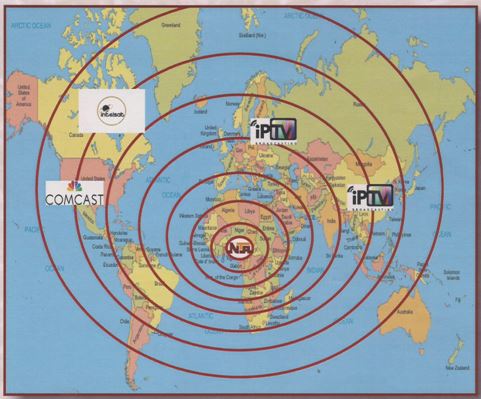
Aside the 36 Stations and Abuja, NTA runs 62 Community Broadcast Stations, Digital Multi-Channels and subsidiary companies as indicated by the map.
INTERNATIONAL BROADCASTING AND REACH
As a global network, NTA presently has bureaus in 7 countries of the world, including the United Kingdom, Washington DC, Ottawa (Canada), Accra (Ghana), Cairo (Egypt), Germany and China. These Bureaus are manned by experienced reporters who cover Nigerian-related events around the world.
The Authority is also perpetually committed to recreating its network programmes, not only to satisfy the yearnings of millions of TV viewers, but particularly to strengthen it in fulfilling its crucial role as a pillar and enhancer in the development of a shared national consciousness, cohesion and identity of the Nigerian nation State.
Further, NTA signals could be accessed in:
Washington DC on IPTV: ntasuncast.com, via satellite on COMSAT Cable and on INTELSAT America – 5 (1. A – 5)
Middle East and Far East on IPTV www.suncast.co.ae.
World-Wide: www.nta.ng
NTA SUBSIDIARIES
NTA runs the following subsidiary organizations:
NTA TV Enterprises: Involves in facilitating and promoting non-core broadcasting business activities.
NTA Property and Investment Company (NTAPIC):Responsible for the management of NTA’s facilities, properties and other investments.
NTA Educational Television (NTA/ETV): Produces educational programmes for NTA Educational Channels.
4.NTA TV College, Jos: Pioneer training institution for the broadcast industry.
Integrated Television Services (ITS):Manages the distribution of digital signals and NTA’s relationship with other broadcasting stakeholders in the digital system.
THE STRUCTURE AND MANAGEMENT
Board of Directors
Board of Management
Zonal Directors
General Managers
Officers in Charge
BOARD OF DIRECTORS
This is made up of eight (8) government-appointed members of eight (8) Executives Directors and headed by the Director General. The Executive Directors head the following Directorates:
DIRECTORATE OF PROGRAMMES
For over five (5) decades of professional practice, NTA’s Programmes Directorate has produced programmes in the genres of drama, children, youth, talk shows and documentaries, all targeting at family entertainment.
Thus, the fundamental principles guiding NTA programming hinge on the production and airing of educative, informative, entertaining and marketable rich programmes that meet all the criteria of standard production.
NTA’S RICH LIBRARY OF PROGRAMMES
Drama: NTA’s classics like the ‘Village Headmaster’, ‘Cock Crow at Dawn’, ‘Behind the Clouds’, and ‘Masquerade’ treated several moral, family and societal issues; thus promoting the appreciation of indigenous values. Soap operas like ‘Mirror in the Sun’ and ‘Ripples’ were chart busters that viewers rushed home to watch weekly.
Musical/Entertainment: The live musical programme, ‘Band Stand’ had for years attracted thousands of live audiences of different age groups and societal standing. Other musical shows like ‘Stars of the Tube’, ‘The Bala Miller Show’, ‘ASAA’ and so many others also promoted mental and physical relaxation.
Children Variety: In the genre of children’s programming, the ever expressive and didactic folk-drama programme, ‘Tales by Moonlight’ remains (about) the longest running TV programme that extols the aesthetics of African/Nigerian folk-lore.
NEW PROGRAMMES
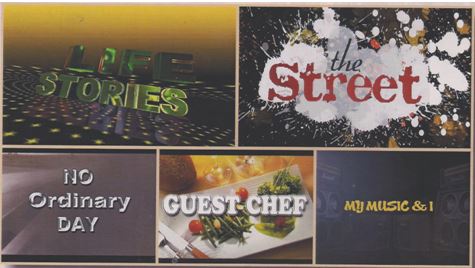
In its quest to meet up with current realities in TV entertainment, the Programmes Directorate in recent times embarked on the creation of new programme concepts and redesigning of some old programmes to elicit more viewership and sustain the interest of different target audience. These programmes include ‘Weekend Deal’, ‘Life Stories’, ‘The Street’, ‘No Ordinary Day’, ‘Guest Chef’, ‘My Music and I’, and ‘Boundaries and Transit’.
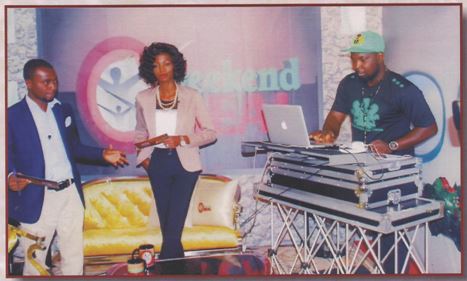
Weekend Deal: A flagship breakfast show of mixed grill interviews that runs for two and half hours. It is easily the most engaging TV weekend breakfast show on air nationwide. One of the segments,‘15 Minutes Studio’, is the most entertaining; as it features a lively personality interview of a celebrity or dignitary. Other segments include fascinating features from all over the country, quick cuisine and lots more.
Life Stories: A public enlightenment documentary series that explores the rich, distinct cultural heritage of the Nigerian People.
The Street: Highlights engrossing untold stories from our streets.
No Ordinary Day: Explores extraordinary days in ordinary people’s lives – stories of hope, like people surviving against all odds, as well as other thought provoking encounters.
Guest Chef: A special cookery programme that showcases distinguished persons of interest, who prepares exceptional meal for viewers.
My Music and I: A personality profile musical entertainment programme that gives the guest opportunity to name favourite songs and musicals that captivate the viewers.
Boundaries and Transit: A documentary travelogue which exposes Nigerians to the different ways of life in every geo-political zone of Nigeria.
INTERNATIONAL PARTNERSHIP
Another key responsibility of the Programmes Directorate is its lead in International relations with large TV networks which has led to significant collaboration for co-productions and acquisition of new programmes, to further liven up the screen. Through these efforts, NTA now partners with BBC Media Action, Discovery +234, CNBC International among others.
There are other local partnerships with indigenous Producers and organizations with similar objectives; like the ‘Centre for Black African Arts and Culture (CBAAC)’.
NTA is always open to such meaningful and mutually beneficial partnerships for the enhancement of the broadcast industry.
DIRECTORATE OF NEWS
The news Directorate ensures that purposeful communication of development and activities within the country, other parts of the African continent and global community are brought to the attention of the populace. The Directorate deploys both its core News and Current Affairs belt to the actualization of Government’s policies and programmes.
The News Directorate covers assignments both locally and internationally with the aim of bringing the activities of Government nearer to the people; with its broad reach throughout the nation and globally.
Other activities of the News Directorate with its Zonal Centers, State and Community Stations across the federation are-:
News Casts at 4pm Nationwide
NTA Network News at 9:00pm
News at 7:00am
News at 7:00pm
NTA One O’clock International(1:00am)
NTA Four O’clock International (4:00am)
NTA News 24, 10:00am, 3pm, 6:00pm and 11:00pm.
Newsline: One of NTA’s flagship programmes that focuses on news of human interest. It is broadcast every Sunday, 9.00pm
Weekend File: Another flagship programme spotlighting the activities of various public institutions and broadcast every Saturday, 9.00pm.
CURRENT AFFAIRS PROGRAMMES
There is an array of not less than 30 Current Affairs programmes handled by highly trained professionals in various areas. These programmes are structured to provide an information-rich environment through robust discussions to deepen the democratic process and culture. For instance, the programme ‘Good Morning Nigeria’ is easily the most watched political and current affairs programme in the country. With a no holds-bar interview format and distinct style of presentation, the programme x-rays government policies, issues of national interest, developments, government activities, politics etc.
DIRECTORATE OF MARKETING
The Directorate has the primary responsibility of generating revenue for the Authority. Due to the vast nature of the country, there are unbelievable media marketing possibilities and the Marketing Directorate is always poised and effectively equipped with well-trained professionals to give the desired touches to the advertising needs of NTA’s numerous clienteles; with the right cutting-edge marketing creativity. Moreover, with NTA’s widest reach in the entire African continent and international audiences, it remains the best choice for the advertiser.
DIRECTORATE OF FINANCE AND ADMINISTRATION
This arm of the Directorate is laden with the responsibility of the day to day administrative running and financial management of the Organization. The NTA nationwide staff strength covering 36 States and Abuja is over 5000.
DIRECTORATE OF ENGINEERING
Charged with the responsibility of managing the technical and technological aspects of the organization; aside the core task of technical management of broadcasting through improved clarity in NTA’s transmission, the Engineering Directorate is carrying out an upgrade preparatory to digital broadcasting switchover expected in June 2017.NTA operations are linked with the Fibre-optic cable system which brings about improved quality to broadcast signals.
DIRECTORATE OF SPECIAL DUTIES
This Directorate carries out exceptional services that fall outside the core activities or operations of the traditional operational areas of Television Broadcasting and its auxiliary departments of Corporate Affairs and Research and Development. It also supervises the Multi-Channels project comprising of eight (8) specialized broadcasting activities of NTA on digital platform. These channels are:
NTA News 24
NTA Entertainment
NTA Knowledge
NTA Parliament
NTA Sports 24
NTA Languages channels:
Hausa
Igbo (Igbo Ezue)
Yoruba (Ikanni Oodua)
DIRECTORATE OF TRAINING AND CAPACITY BUILDING
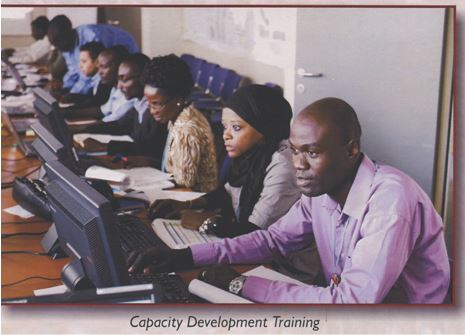
The Directorate is responsible for manpower development, through regular training of staff, via workshops, seminars and short courses. The workforce capitalizes on the benefits of these training to deliver standard broadcast media practice.
NTA/Star TV Network Partnership: Pioneering Digitization in Nigeria
With NTA’s strategic partnership with the Star TV Network of China in 2009, digital television services have reached at least 52 Nigerian cities. This project has eventually become the engine room of the entire national digitization process; as Nigeria was able to test-run a successful analogue to digital switchover on June 30, 2014 in Jos, Plateau State.
OUTSIDE BROADCAST SERVICES
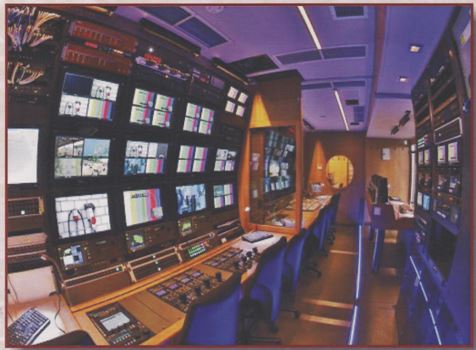
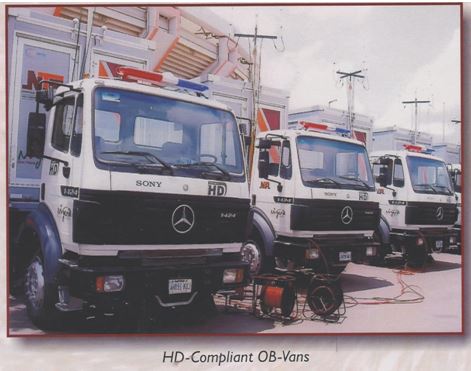
NTA’s outside broadcast capability is outstanding, with latest OB Vans with HD facilities. They are managed by qualified and experienced engineers and support services personnel. Each OB Van is installed with:
10 Digital Video Cameras,
Sony MVS 8000 Video Switcher
Lawo Dalix Digital Audio Mixer
64 × 64 Matrix selector
Morpho 3-D Character Generator
60 KVA generator and a DSNG equipment van attached
NTA’S LEADING ROLE AND COLLABORATION IN THE ENTERTAINMENT INDUSTRY
What is now known as Nollywood, Nigeria’s movie industry had its emergence from the pioneering efforts of NTA in drama production and training of the performing artistes. Today, Nollywood prides as the second largest movie industry in terms of yearly volume of production. NTA continues to support the industry in the areas of partnerships and promotions. The achievement of Nollywood has brought it to the level of one of the major foreign earners for the country.
Indeed, NTA is positioned to deliver the best television and allied services through its subsidiaries. This makes the organization a partner of choice in terms of business relations and collaboration; that brings mutual benefit to both sides of the divide. Through its highly professional and quality services, as delivered by its trained workforce, the Authority has effectively enhanced national and regional cohesion; while meeting international broadcasting entertainment appetite.